

Cost-Effective Digital Transformation Strategies for Small Businesses
Sept. 21, 2025
2026

Table of Contents
A recent report says that the global digital transformation market is expected to grow to $1,009.8 billion by 2025 from $469.8 billion in 2020, at a CAGR of 16.5% during this period. For small businesses specifically, the stakes are equally high, 81% of small businesses plan to increase their technology use in the coming year, with more than three-quarters (77%) specifically looking at emerging technologies.
The return on investment tells about the importance of digital transformation strategies. An average of 63% of respondents have reported a positive impact in terms of profitability or performance from digital transformation efforts over the past 24 months. Perhaps most compelling for cost-conscious small business owners, 79% say technology has helped them avoid raising prices while maintaining competitiveness.
In this blog, I will walk you through the main digital transformation strategies that small businesses can use to grow smarter, save costs, and stay competitive without breaking the bank.
Key Takeaways
|
Strategy Area |
Key Benefit |
Average Cost |
Implementation Time |
ROI Timeline |
|
Cloud Migration |
40-60% reduction in IT costs |
$50-200/month |
2-4 weeks |
3-6 months |
|
Process Automation |
30-50% time savings |
$25-100/month |
1-3 weeks |
1-3 months |
|
CRM Implementation |
29% increase in sales |
$20-150/month |
2-6 weeks |
2-4 months |
|
Analytics Tools |
15-25% better decision making |
$0-50/month |
1-2 weeks |
1-2 months |
|
Digital Marketing |
20-40% more leads |
$100-500/month |
2-8 weeks |
2-6 months |
|
Mobile Solutions |
25% faster transactions |
$30-200/month |
1-4 weeks |
1-3 months |
Digital transformation has become essential for businesses of all sizes, but small businesses often struggle with the misconception that it requires massive investments and complex overhauls. The reality is that cost-effective digital transformation can be achieved through strategic, phased approaches that deliver significant returns without breaking the bank.
This blogpost shows practical digital transformation strategies that small businesses can implement to modernize their operations and drive sustainable growth.
Digital Transformation for Small Businesses
According to Statista data, 75% of companies are likely to adopt AI, cloud computing, and data analytics technology from 2023 to 2027. This targeted approach makes sure that every dollar spent contributes directly to business growth and operational efficiency.
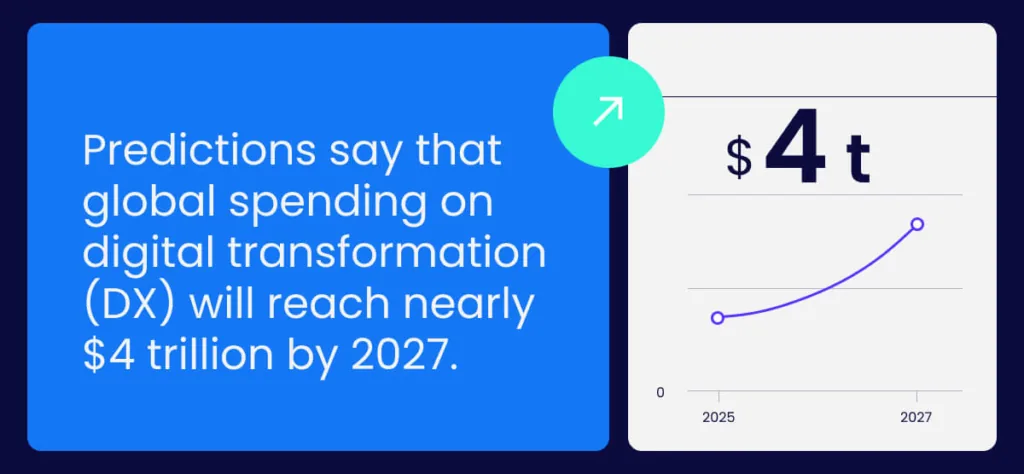
Digital transformation for small businesses involves integrating digital technologies into fundamental business operations, changing how companies operate and deliver value to customers. Small businesses must approach digital transformation strategies systematically, that are mainly focusing on solutions that offer the highest impact relative to their investment.
The key to successful small business digital transformation lies in understanding that it is about selecting the right tools and strategies that align with specific business objectives and customer needs.
Cloud-First Infrastructure
Moving to cloud-based solutions represents one of the most cost-effective digital transformation strategies for small businesses. Cloud infrastructure eliminates the need for expensive on-premise servers, reduces IT maintenance costs, and provides scalability that grows with your business.
Popular cloud platforms like Google Workspace, Microsoft 365, and Amazon Web Services offer small business packages that provide enterprise-level functionality at a fraction of traditional costs. These solutions include email hosting, file storage, collaboration tools, and basic business applications.
The subscription-based model of cloud services also improves cash flow management, converting large capital expenditures into predictable monthly operational expenses. This approach allows small businesses to access advanced technologies.
Automating Repetitive Tasks
Business process automation stands out as one of the highest-impact digital transformation strategies for resource-constrained small businesses. By identifying and automating repetitive, time-consuming tasks, businesses can free up valuable human resources for more strategic activities while reducing operational costs.

Customer relationship management (CRM) systems like HubSpot, Salesforce Essentials, or Zoho CRM can automate lead nurturing, email marketing campaigns, and sales pipeline management. These platforms often include free tiers or affordable small business plans.
Accounting and bookkeeping automation through tools like QuickBooks Online, or Wave can eliminate hours of manual data entry while improving accuracy and financial visibility. These solutions integrate with banking systems and other business applications, creating seamless workflows that reduce administrative overhead.
Digital Transformation ROI Infographic
Key ROI Metrics:
- 300% ROI within 12 months
- 250% ROI within 18 months
- 200% ROI within 12 months
- 400% ROI within 6 months
Customer Experience
Digital customer experience improvements often provide the most immediate and measurable returns on digital transformation investments. Small businesses can leverage various digital channels to better serve customers while reducing service costs and expanding market reach.
Implementing live chat functionality on company websites through tools like Intercom, Zendesk Chat, or even free solutions like Tawk.to can improve customer support while reducing phone support costs. These platforms often include AI-powered chatbots that can handle common inquiries automatically, providing 24/7 customer service without additional staffing costs.
Data-Driven Decision
Small business analytics doesn't require expensive enterprise software or dedicated data scientists. Modern analytics tools provide powerful insights through user-friendly interfaces that small business owners and employees can easily utilize.
Google Analytics offers comprehensive website performance insights at no cost, helping businesses understand customer behavior, identify popular products or services, and optimize marketing campaigns. When combined with Google Search Console, businesses gain valuable visibility into their online presence and search performance.
According to a 2025 Clarion Tech report, accessible BI tools like these empower small businesses to make smarter, data-driven decisions without breaking the bank. Point-of-sale systems like Square, Shopify POS, or Clover provide built-in analytics that help retail businesses understand sales patterns, inventory trends, and customer preferences.
Effective Online Presence
A strong digital presence is very important for modern business success, and small businesses can establish professional online presence without significant investments. Modern website builders like WordPress, Squarespace, or Wix provide professional templates and functionality that previously required custom development.
Search engine optimization (SEO) represents one of the most cost-effective digital marketing strategies available to small businesses. Email marketing platforms such as Mailchimp or Constant give ways to maintain customer relationships and drive repeat business. These tools provide automation capabilities and professional templates that help small businesses compete with larger organizations in customer communication.
Mobile Technology
Mobile-first strategies have become essential as consumers increasingly rely on smartphones for business interactions. Small businesses can implement mobile solutions that improve customer experience and operational efficiency without major investments.
According to a 2025 Metrobi report on mobile payments, technologies like Tap to Pay and mobile wallets will continue to grow, helping small businesses stay flexible and competitive in an increasingly mobile world.
Mobile payment solutions allow businesses to accept payments from anywhere, expanding sales opportunities and improving customer convenience. These solutions typically require only small card readers and smartphones or tablets, making them accessible to even the smallest businesses.
Measuring Success and ROI
Successful digital transformation requires ongoing measurement and optimization. Small businesses should establish key performance indicators (KPIs) that align with their digital transformation objectives, such as customer acquisition costs, operational efficiency metrics, or revenue per employee.
Regular assessment of digital transformation initiatives helps identify successful strategies worth expanding and less effective approaches that should be modified or discontinued. This iterative approach makes sure that digital transformation investments continue delivering value over time.
Implementation Roadmap
Here is the implementation roadmap of your small businesses success.
Small businesses should approach digital transformation systematically, starting with initiatives that give the highest impact relative to investment. Begin with foundational elements like cloud infrastructure and basic automation, then gradually expand into more advanced capabilities as the business grows and digital maturity increases.
Conclusion
To sum up, I would say that you should consider partnering with Codesuite team, beacuse our team understand small business constraints and can provide guidance on priority setting and implementation strategies. Many communities offer small business development resources that include digital transformation services at low cost.
Frequently Asked Questions (FAQs)
Q1: How much should a small business budget for digital transformation?
A: Most small businesses should allocate 5-10% of their annual revenue to digital transformation initiatives. Start with 3-5% in year one, focusing on high-impact, low-cost solutions like cloud services and basic automation tools.
Q2: What's the first step in digital transformation for small businesses?
A: Begin with a digital audit of your current processes. Identify the most time-consuming manual tasks and customer pain points. Usually, cloud migration and basic CRM implementation provide the quickest wins.
Q3: How long does it take to see ROI from digital transformation?
A: Simple automation and cloud solutions typically show ROI within 1-3 months. More complex implementations like comprehensive CRM or e-commerce platforms may take 6-12 months to demonstrate full returns.
Q4: Can small businesses implement digital transformation without IT expertise?
A: Yes! Many modern digital tools are designed for non-technical users. Start with user-friendly, cloud-based solutions that offer customer support and training resources. Consider partnering with local IT consultants for more complex implementations.
Q5: What are the biggest mistakes small businesses make in digital transformation?
A: Common mistakes include: trying to implement everything at once, choosing complex solutions when simple ones suffice, not training employees properly, and failing to measure results. Focus on gradual, strategic implementation.
Q6: How do I choose the right digital tools for my business?
A: Evaluate tools based on: your specific business needs, ease of use, integration capabilities, scalability, cost-effectiveness, and customer support quality. Most platforms offer free trials—use them to test compatibility.
Q7: Is cybersecurity expensive for small businesses?
A: Basic cybersecurity doesn't have to be expensive. Essential measures like multi-factor authentication, cloud backups, and employee training can cost less than $100/month while providing significant protection.
Q8: How do I measure the success of digital transformation?
A: Track key metrics like: operational efficiency (time saved), customer satisfaction scores, revenue growth, cost reductions, and employee productivity. Set baseline measurements before implementation to track improvements.